

Hilton Fukuoka Sea Hawk
Architecture as Revenue Infrastructure
Fukuoka, Japan
& event hotel
F&B · Sports Tourism
revenue strategy
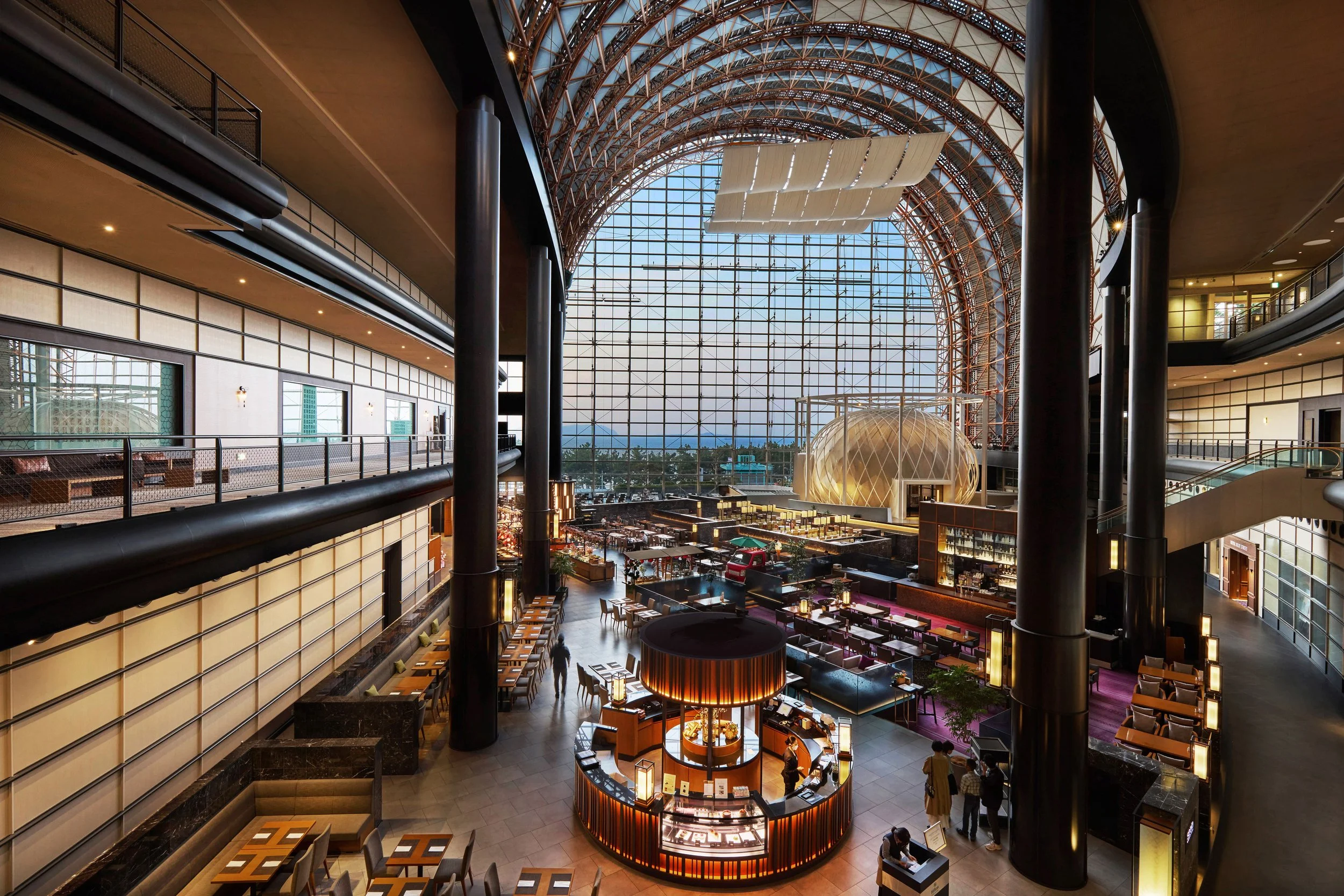
Architecture as commercial strategy.
Large convention hotels rely on architecture not only to house operations but to organise guest activity across multiple revenue-generating venues. When circulation, dining, meetings, and social spaces are visually connected, the building itself becomes part of the commercial strategy.
This case study examines how large-scale architectural environments influence guest perception, event demand, and revenue infrastructure within convention-driven hospitality assets.
One of the largest convention-oriented properties in the region.
Located along the waterfront beside the Mizuho PayPay Dome, the Hilton Fukuoka Sea Hawk operates across a scale that most hospitality properties never approach. The hotel serves multiple demand segments simultaneously — international leisure travelers, conference delegates, sporting event attendees, concert-goers, and destination wedding clients.
Managing this complexity requires more than operational expertise. It requires an architectural environment that organises guest activity naturally — directing movement toward revenue-generating spaces without explicit instruction.
Fukuoka's premier development corridor — combining the Mizuho PayPay Dome stadium, the Sea Hawk hotel complex, and the Fukuoka waterfront into a single concentrated destination. The geographic position creates compound demand from sports, entertainment, and leisure simultaneously.
The atrium as vertical revenue system.
The defining feature of the Hilton Fukuoka Sea Hawk is a monumental multi-story atrium that rises through the centre of the building. Rather than dispersing hotel functions across isolated corridors or wings, the design concentrates circulation, dining venues, lounges, and meeting spaces around a single vertical environment.
By visually connecting restaurants, lounges, meeting rooms, and circulation areas, the atrium continuously exposes guests to the hotel's amenities. Movement through the building naturally reveals additional venues and services — encouraging exploration across the property without explicit direction.
The spatial strategy reflects a design concept popularised by architect John Portman, whose atrium hotels transformed hospitality design in the late 20th century — demonstrating that vertical transparency in a hotel building is not merely aesthetic but commercially functional.
"The atrium does not simply connect the hotel. It exposes the hotel — ensuring that every guest, at every point of circulation, understands the full breadth of what the property offers."
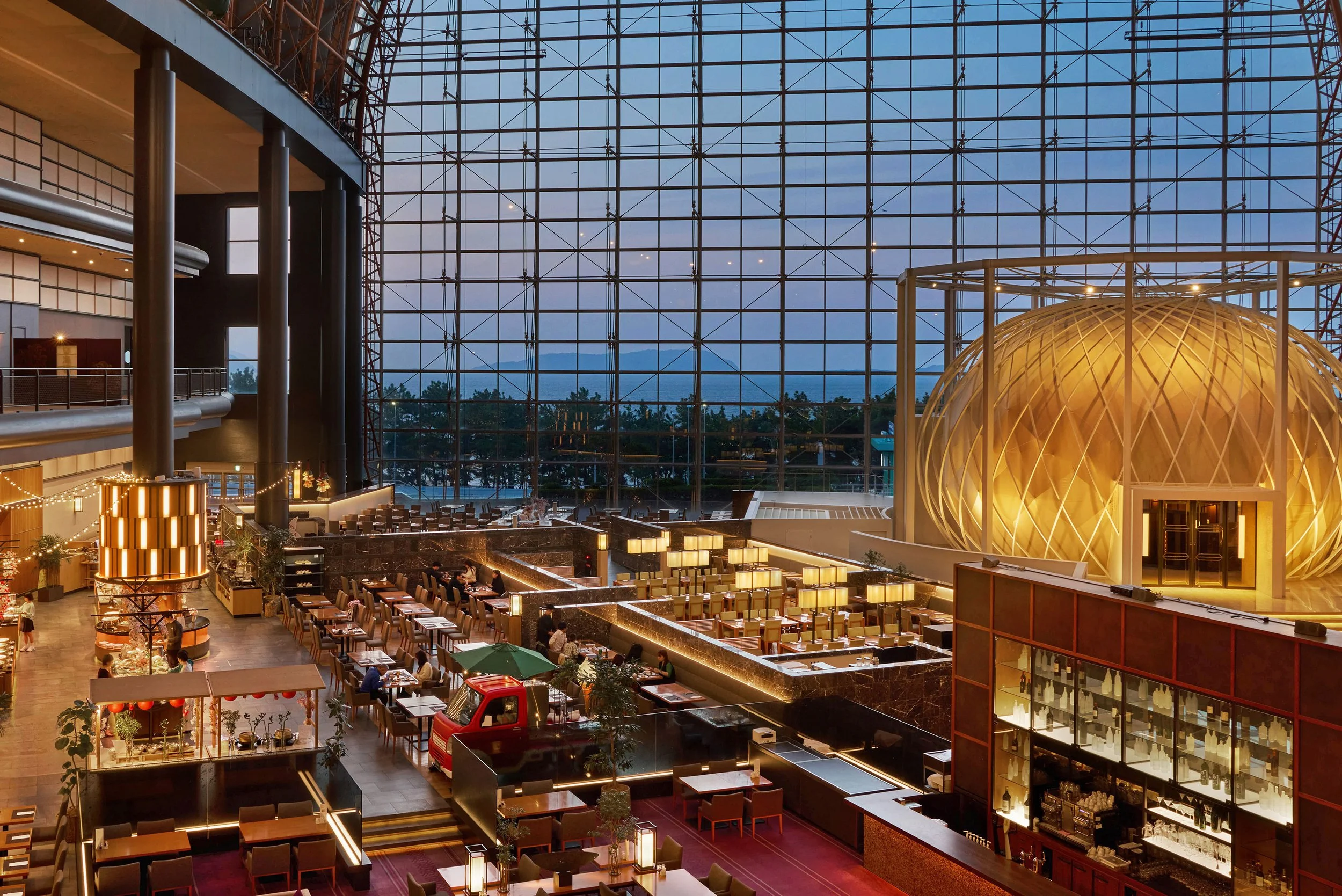
Communicating a space of this scale requires imagery that reveals both clarity and layered activity.
The atrium must be photographed to communicate its full vertical dimension. Images that crop or compress the height misrepresent the architectural ambition and reduce the property's prestige signal.
The relationship between circulation levels — how the ground floor connects visually to the upper balconies — communicates the building's organisational logic and the guest's sense of orientation within the property.
Imagery should reveal the simultaneous activity across dining and lounge environments. An atrium that reads as empty communicates a different property than one that reads as active and socially alive.
The interaction of natural light with the building envelope — particularly through the glazed atrium roof — is the primary differentiator of this architectural environment. It cannot be replicated in artificial light.
Long before a guest evaluates room pricing or amenities, the architecture — and the imagery that communicates it — has already shaped their expectations about the scale and positioning of the experience.
Toy Media Inc. · Hilton Fukuoka Sea Hawk Case StudyThe atrium is a spatial event — an arrival experience that sets expectations and creates the ambient memory that guests associate with the brand. Architecture at this scale is not background. It is the product.
By concentrating activity and visibility, the architectural environment drives ancillary revenue, supports event pricing, and creates the prestige signal that allows the property to compete above its functional room rate.
In OTA and brand marketing environments, the atrium image is the primary decision trigger for event planners, group buyers, and premium leisure travelers — the three highest-value segments this property serves.
In competitive hospitality markets, visual clarity is a revenue decision.
At the Hilton Fukuoka Sea Hawk, the central atrium functions simultaneously as the visual identity of the hotel and the spatial structure that concentrates guest activity across restaurants, lounges, conferences, and events.
Imagery that fails to communicate this scale undermines the property's primary commercial differentiator — before a single room night is priced, before a single event proposal is submitted.
Every hospitality asset has an architectural logic — the spatial decisions that determine how guests move, what they encounter, and how they spend. Most properties document their architecture. The most commercially effective ones communicate it.
The distinction is not photographic. It is strategic. An image that communicates the spatial logic of a building does different commercial work than an image that simply records its appearance.
"Visual positioning, when executed with commercial intent, becomes a revenue instrument — not a marketing accessory."
Does your property's architecture communicate what it's worth?
Large-scale hospitality assets compete on the strength of their visual presentation as much as their physical product. A Visual Revenue Audit identifies exactly where the gap exists — and what it is costing you.
Explore The Visual Audit Or discuss a strategic visual engagement →